
|
Help | | | News | | | Credits | | | Search | | | Guestbook | | | Forum | | | Shop | | | Contact Us | | | Welcome |
Westwood Works 1903-2003 |
|||||||||||||||||
A Cricket Club, known as the Panification Cricket Club, was formed in the Summer of 1905. The name was derived from "panification", which means "the process of bread making". This was the title of Lewis and Pointon Panification Ltd., Wellington. Shropshire - who had amalgamated with Werner, Pfleiderer & Perkins Ltd at around this period - and presumably supplied the majority of the players. Games were played at the Paul Pry Ground, Walton, the G.N. Railway Ground at the bottom of Westwood Bridge and across Westfield Road next to the Aublet Harry factory before moving to the Alma Road Ground on its purchase in 1919. The Cricket square at Alma Road acquired a national reputation and several First Class and List A matches were played there in the late 60s and early 70s.
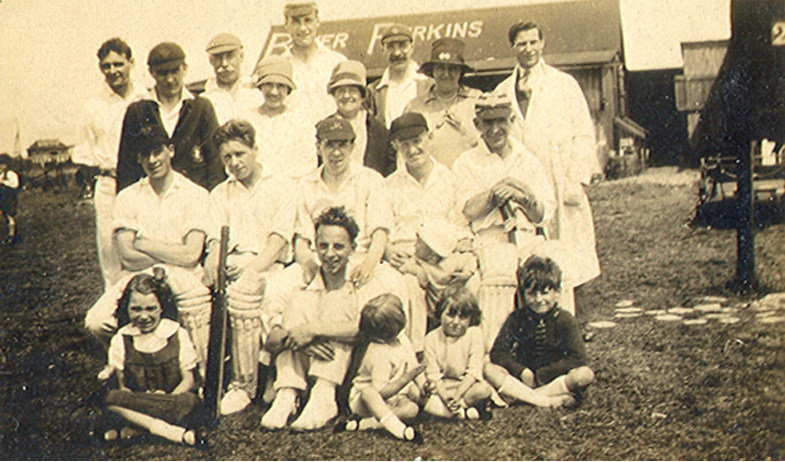 |
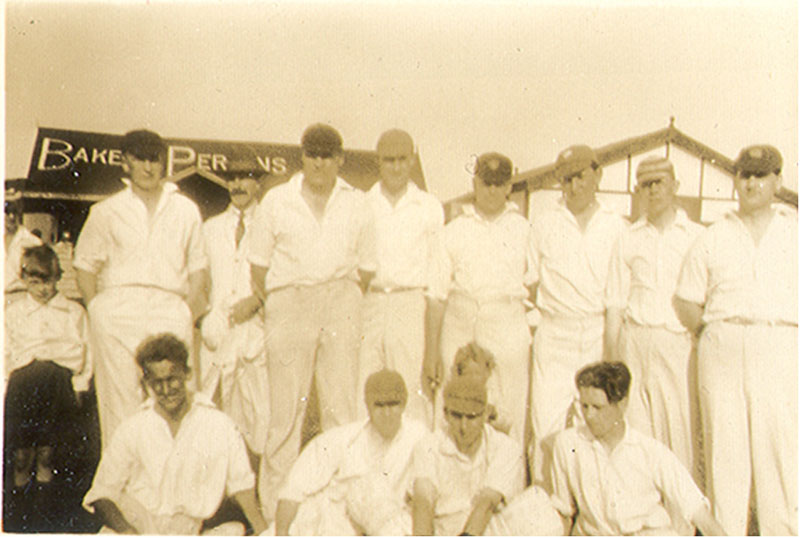
Some early photographs which pose a few questions. The cloche hats sported by the two ladies suggest that the photographs were taken sometime between the Wars and the sign on the roof of the pavilion clearly suggests a Baker Perkins Sports Field - but which one? We have never seen a photograph of a pavilion at Alma Road sporting this signwork. The date must be post-1923 but most of the subsidiary companies were acquired during or after WW2 (Forgrove and Bedewell) or in the 1960s. Could it be Willesden - sometime between 1923 and 1933 (the date of the Great Trek)? The first image in the first row below confirms that Willesden had a cricket team but no other photographs of their sporting facilities have surfaced to date. |
 |
|
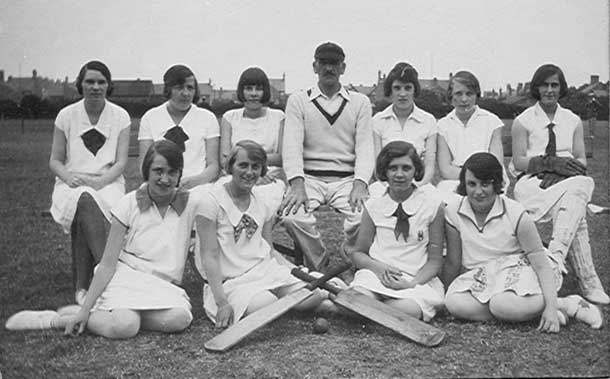 |
Another puzzle picture. Said to be a Westwood Works Cricket XI in 1929, it is interesting in that this is the only reference to a Ladies' Cricket team that has surfaced so far. The background suggests that the photograph was taken on the Alma Road Sports ground and there seems no lack of bats, pads, etc to go round. However, the team is one lady short, this deficiency being made up by a very professional looking gentleman with a moustache. Who might he be? Perhaps it was a team put together for a charity match? |
 |
 |
 |
 |
 |
 |
 |
1924: Westwood vs. Willesden Cricket Match |
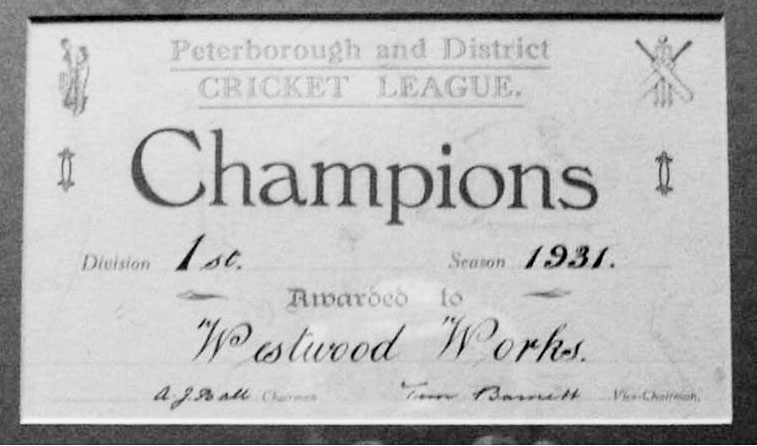
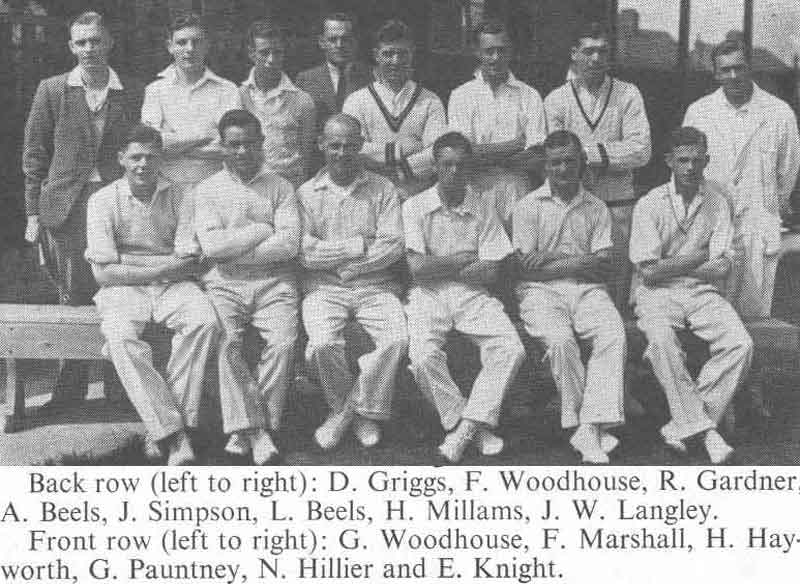
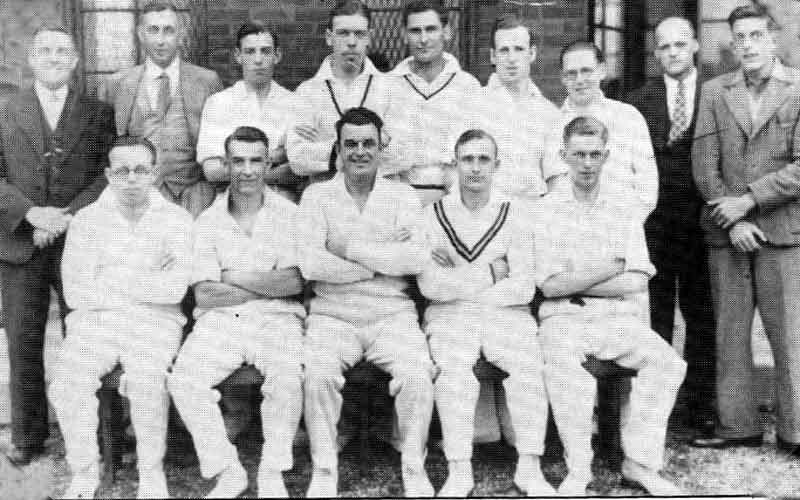
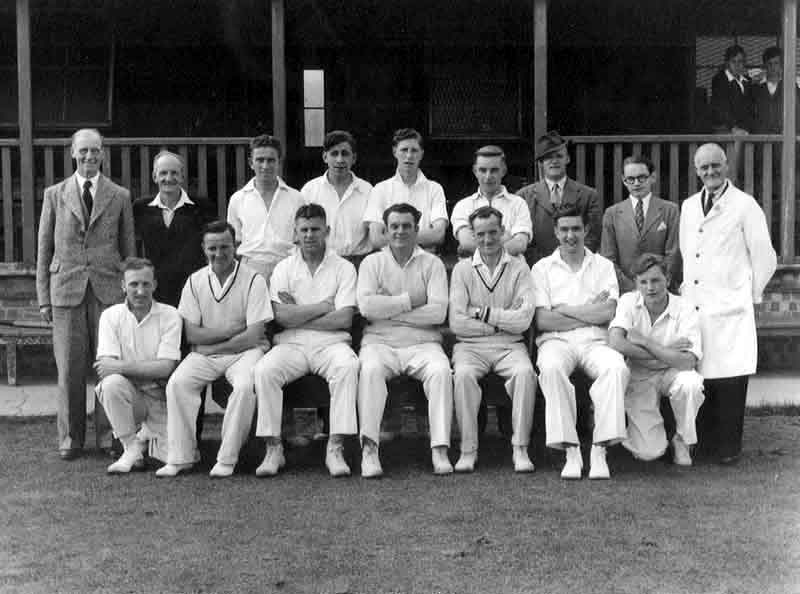
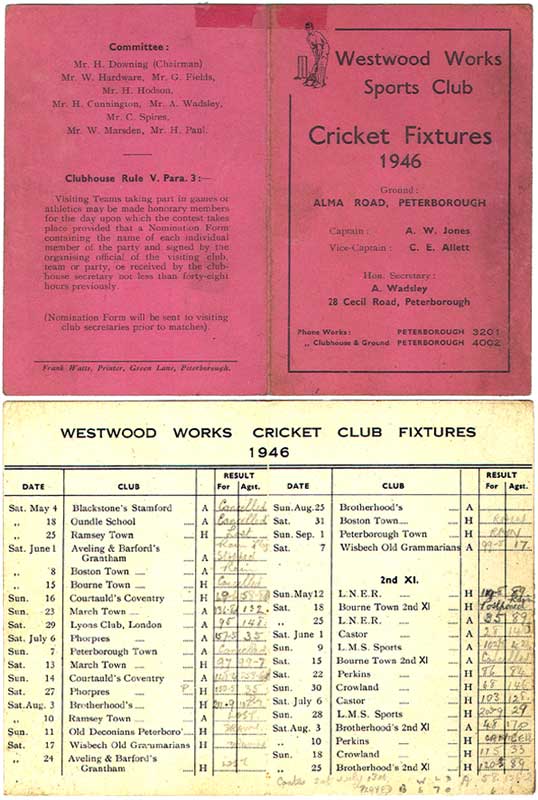
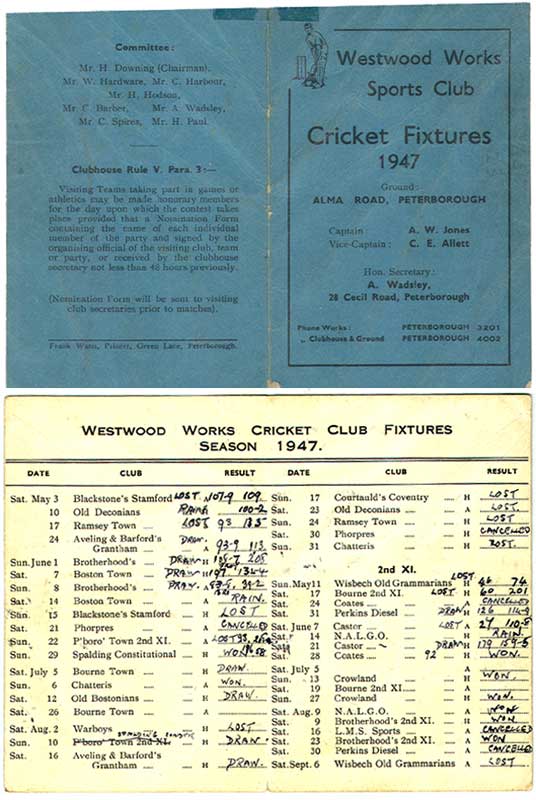
1931: Westwood Works - Champions - Peterborough & District Cricket League - 1st Division | 1936: Westwood Works Cricket 2nd XI | 1937: Westwood Works Cricket 2nd XI | Late 1940s: The 2nd X1 | 1946: Cricket Fixtures | 1947: Cricket Fixtures |
 |
 |
 |
 |
 |
 |
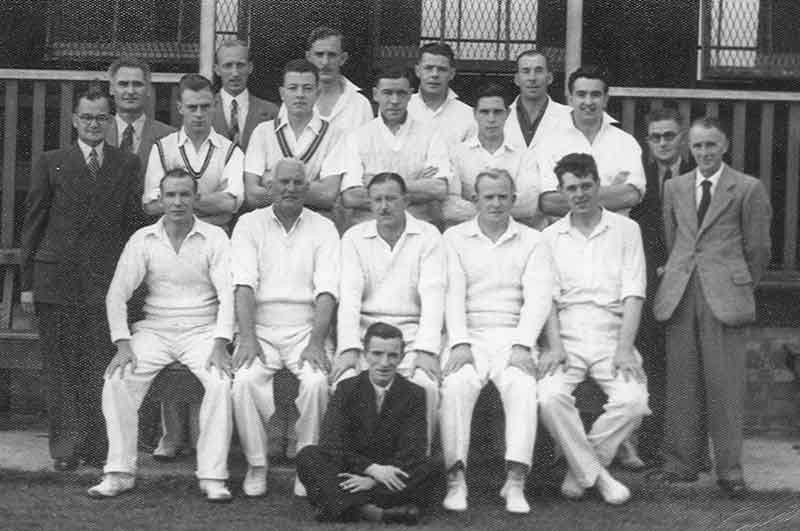 |
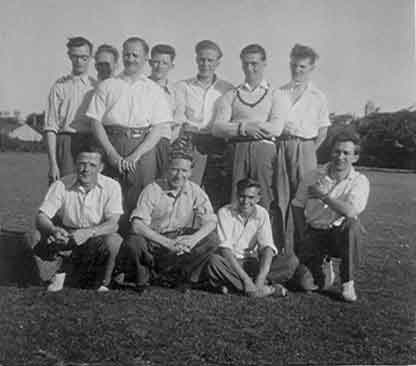
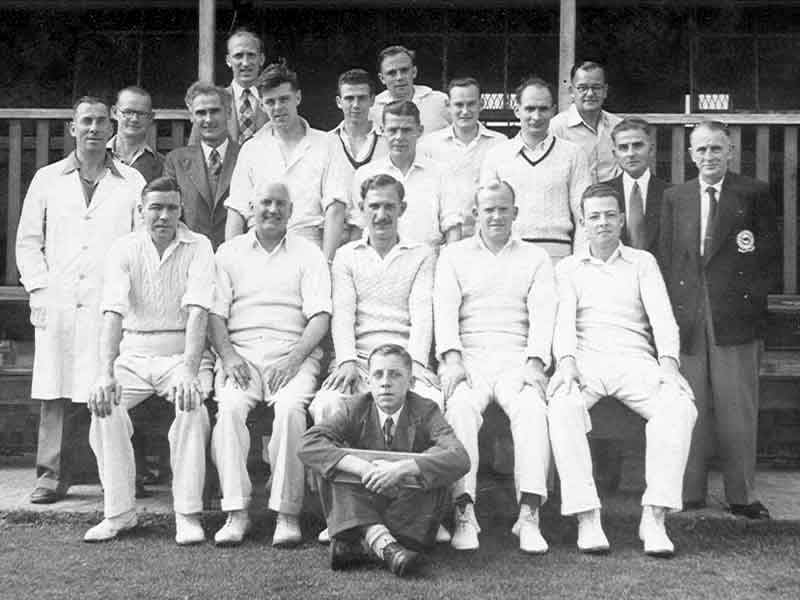
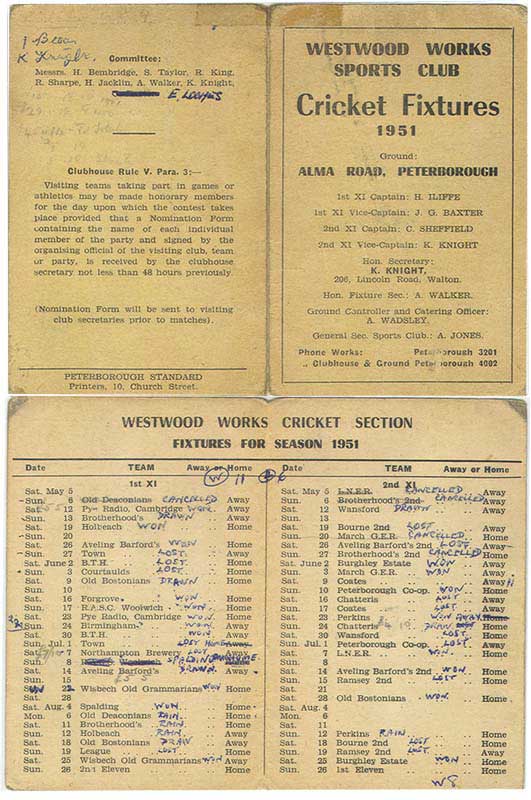
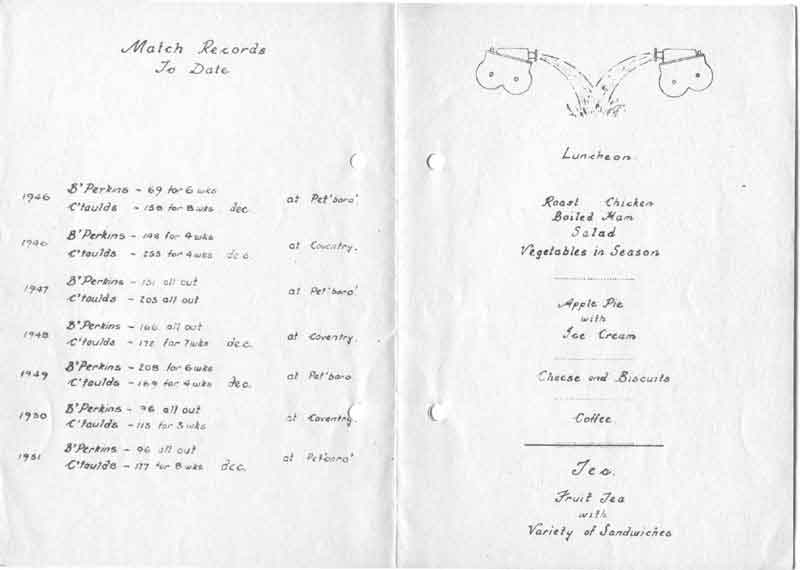
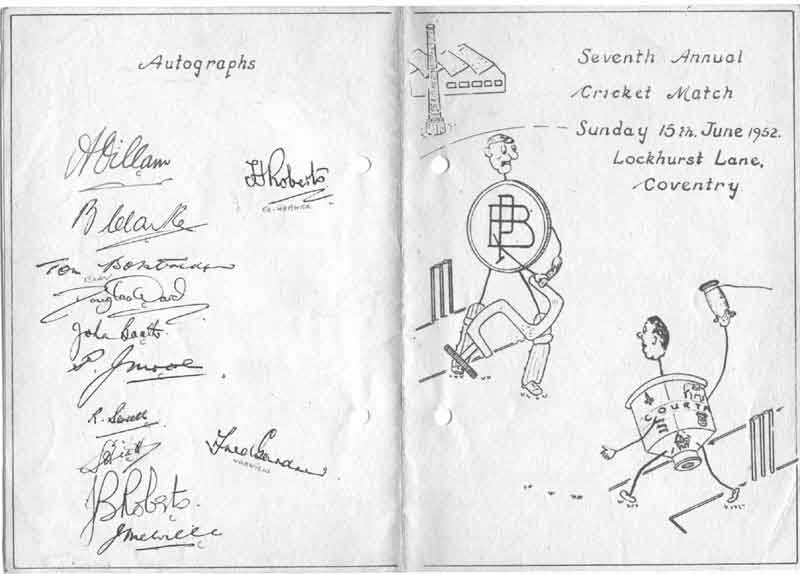
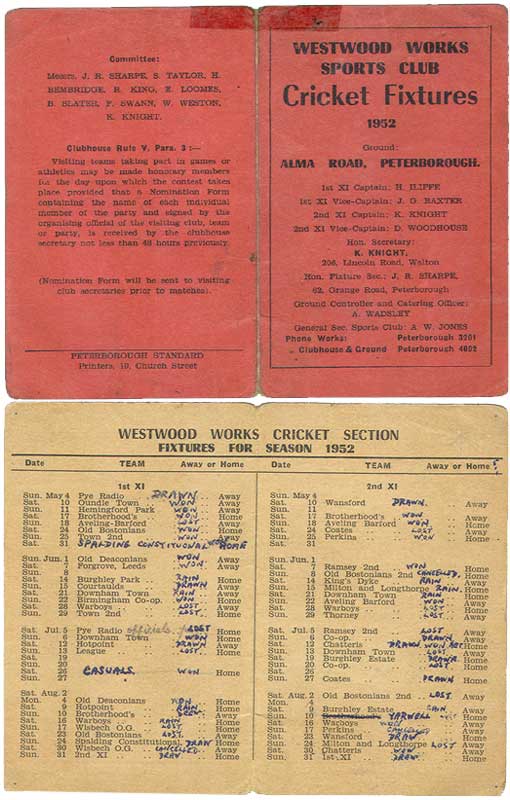
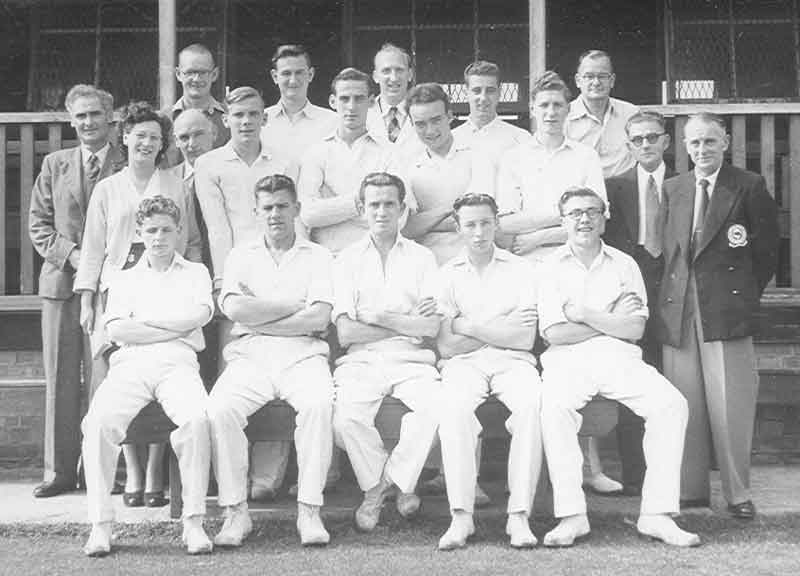
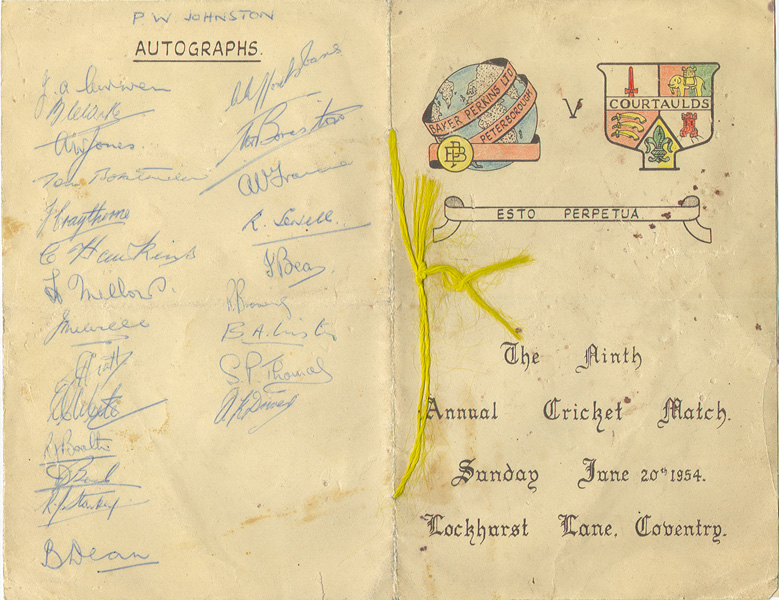
| Early 1950s: The 2nd X1 | 1950: The Staff Hostel Inter- Departmental Cricket Team | Early 1950's: Westwood 1st Xl | 1951: Fixture Card | 1952: 7th Annual Cricket Match between Westwood Works and Courtaulds | 1952: 7th Annual Cricket Match between Westwood Works and Courtaulds | 1952: Westwood Works 1st XI |
 |
 |
 |
 |
 |
 |
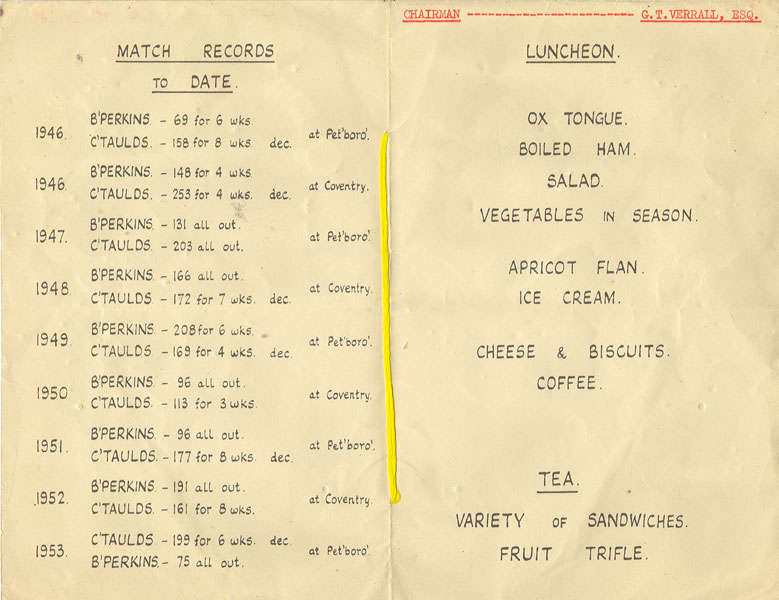 |
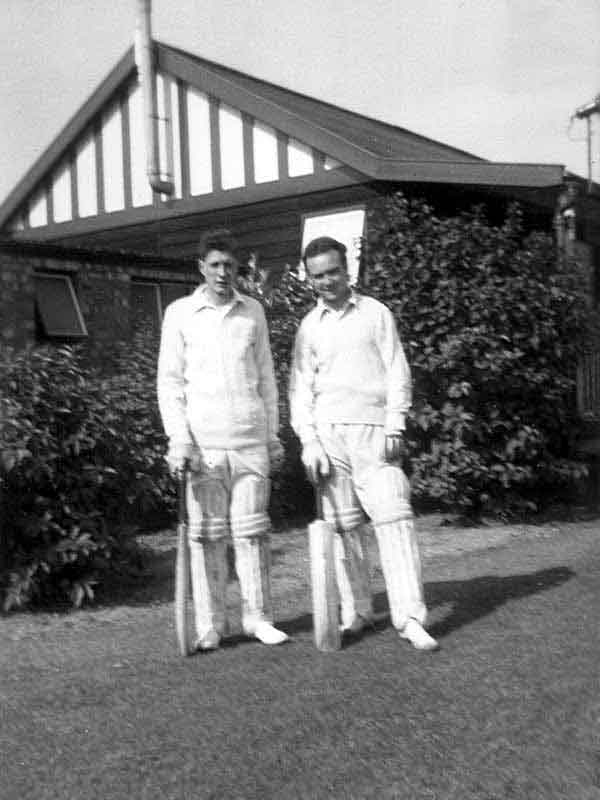
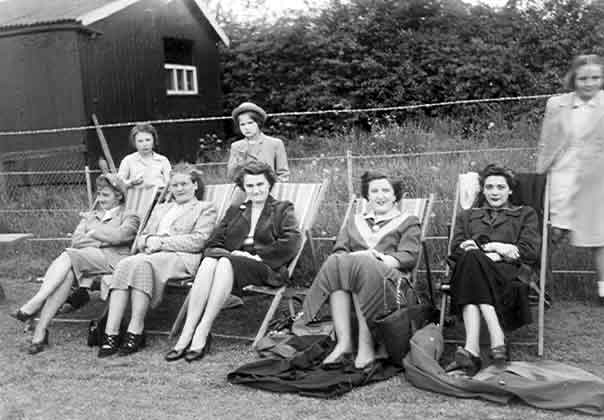
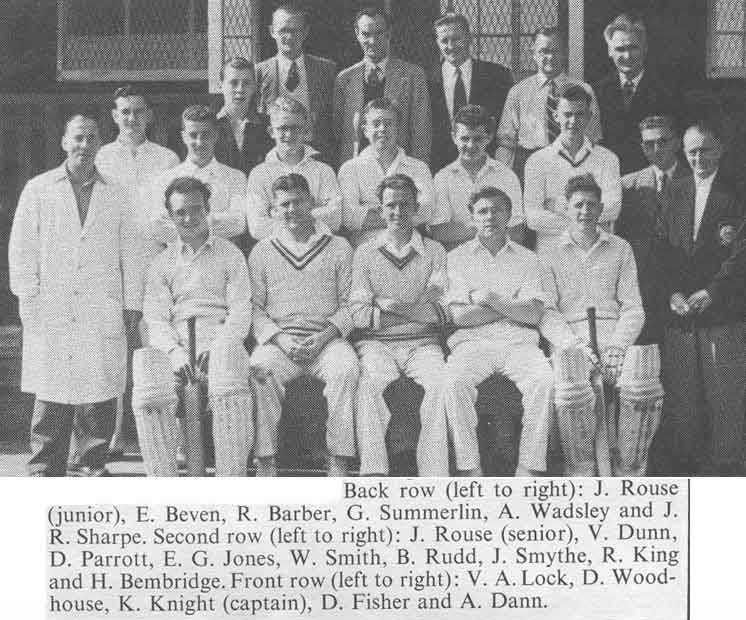
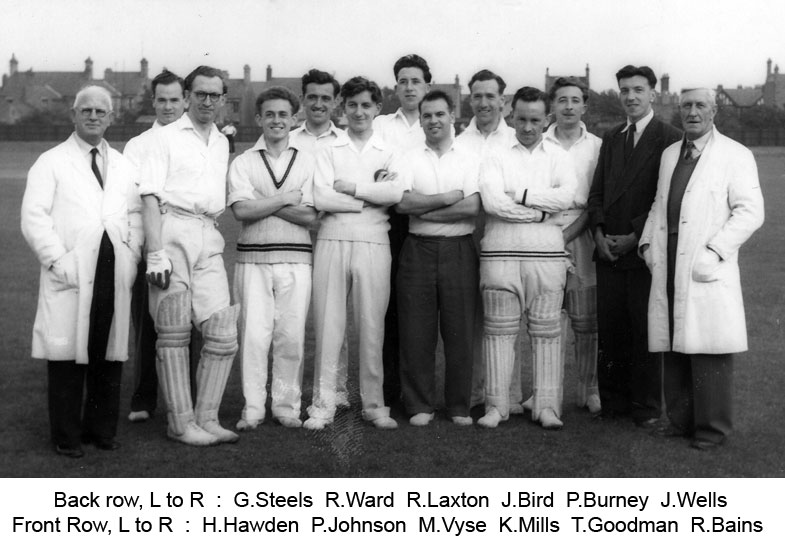
| 1952: Fixture Card | 1953: Westwood Works 1st XI | 1954: Alan Dann and Vernon Lock | 1954: The 2nd X1 Wives | 1954: Westwood Works 2nd XI | 1954: 9th Annual Cricket Match between Westwood Works and Courtaulds | |
 |
 |
 |
 |
 |
 |
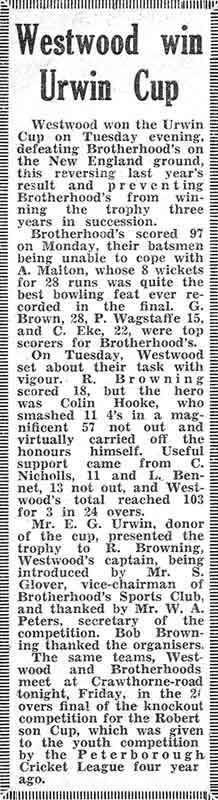 |
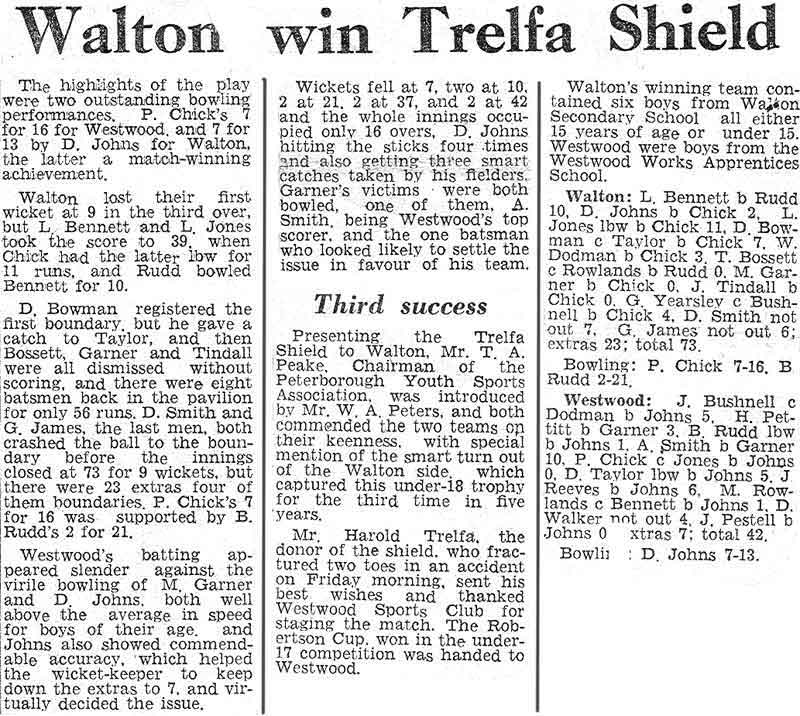
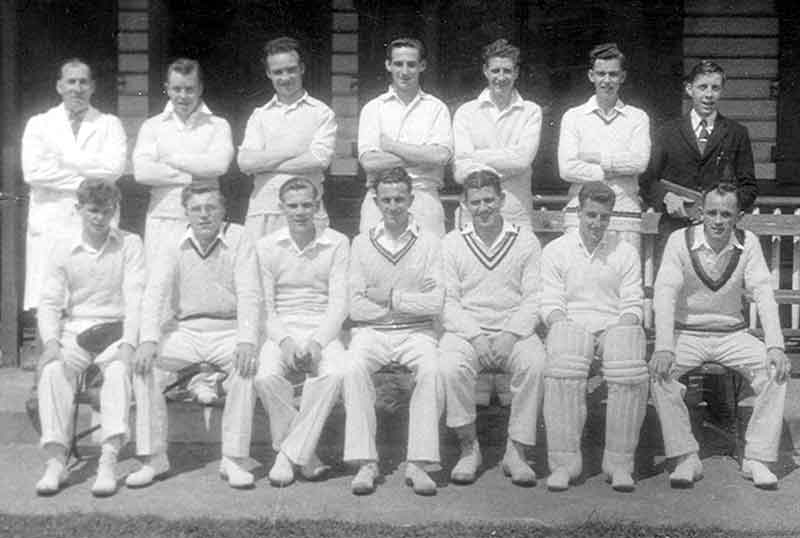
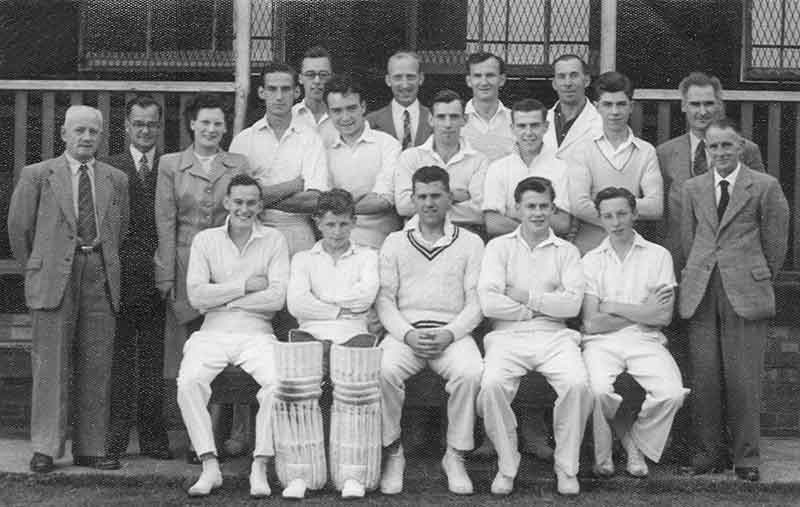
| 1954: Inter-D cricket match - Oven Section versus "The Rest" | 1955: Cricket Section | 1955: Walton beat Westwood for the Trelfa Shield | 1956: Westwood Works 1st XI | 1956: Fixture Card | 1956/57: Westwood win the Urwin Cup | |
 |
 |
 |
 |
 |
||
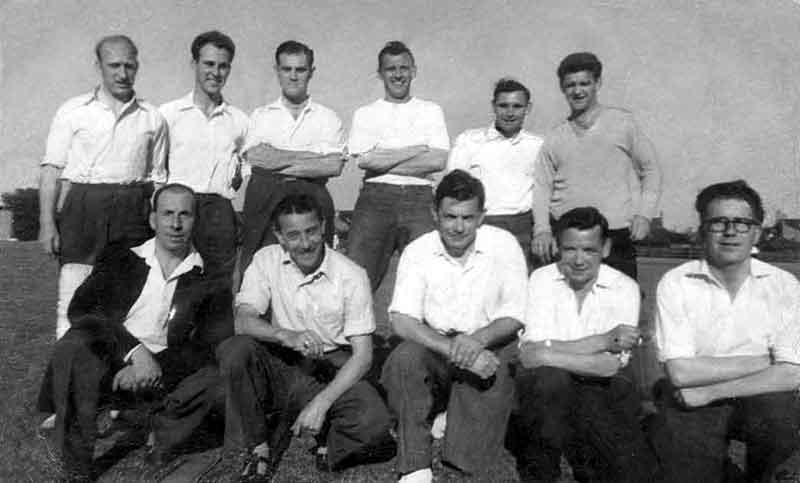
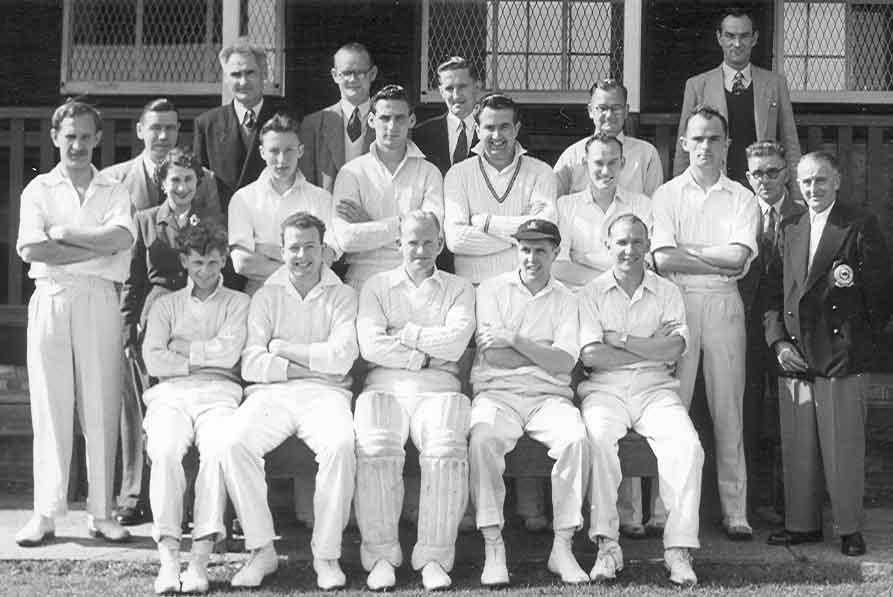
| 1958: Westwood Works 1st XI | 1959: Losing Finalists - U-19s Urwin Cup | Late 1950's: Fitting Shop Inter-D Team | Late 1950s: Westwood Works 1st XI | Late 1950s: Westwood Works 2nd XI v Forgrove | ||
 |
Cricket Section Fixture Cards - 1956 to 1980. |
 |
 |
 |
 |
 |
 |
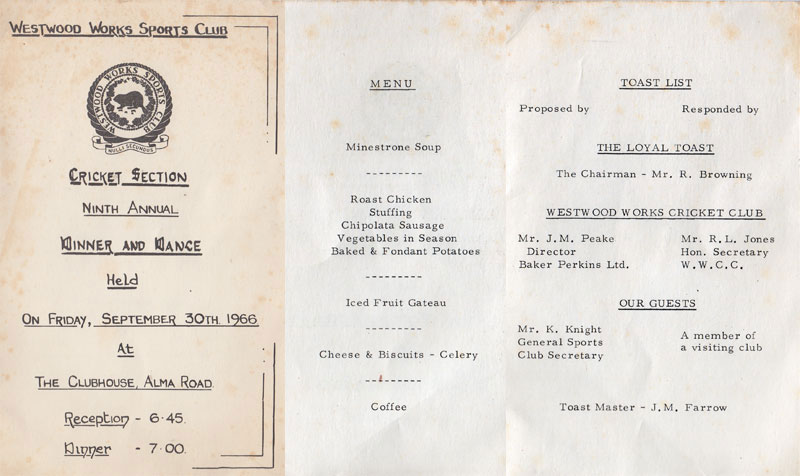 |
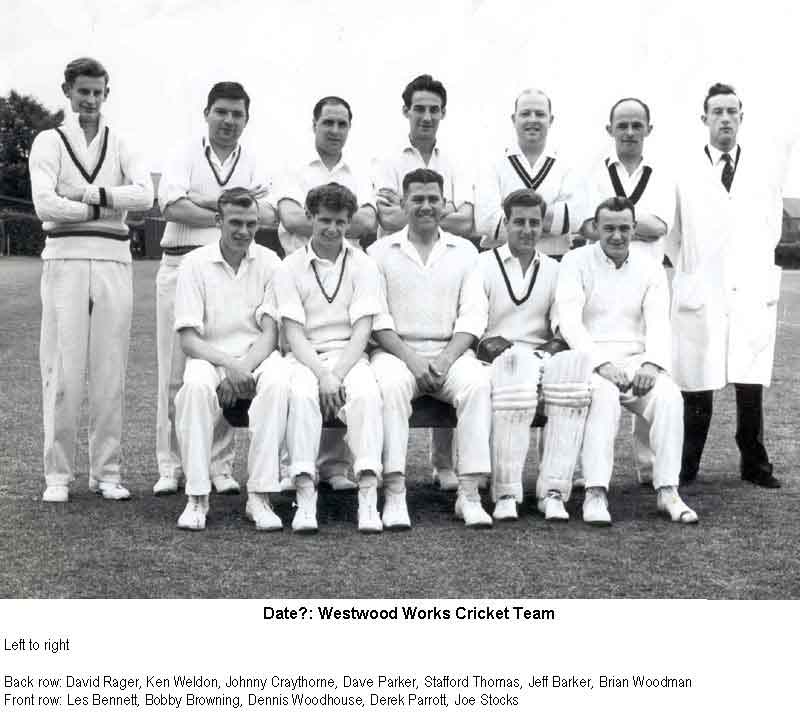
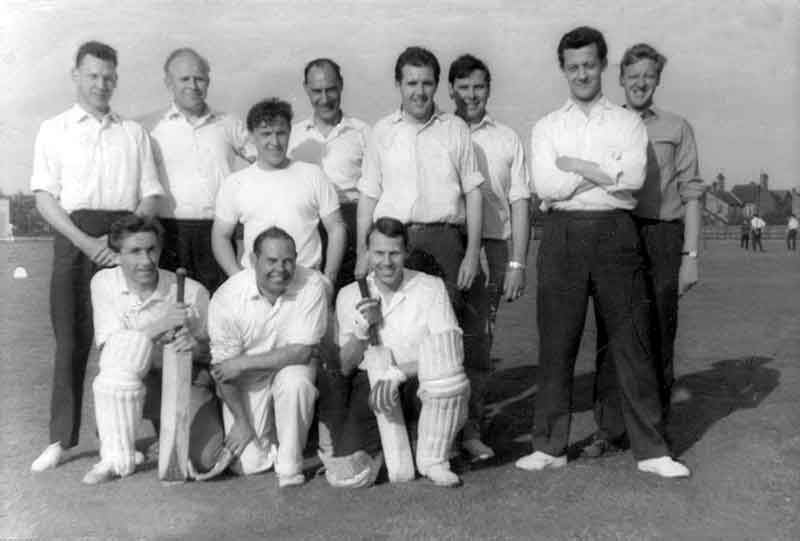
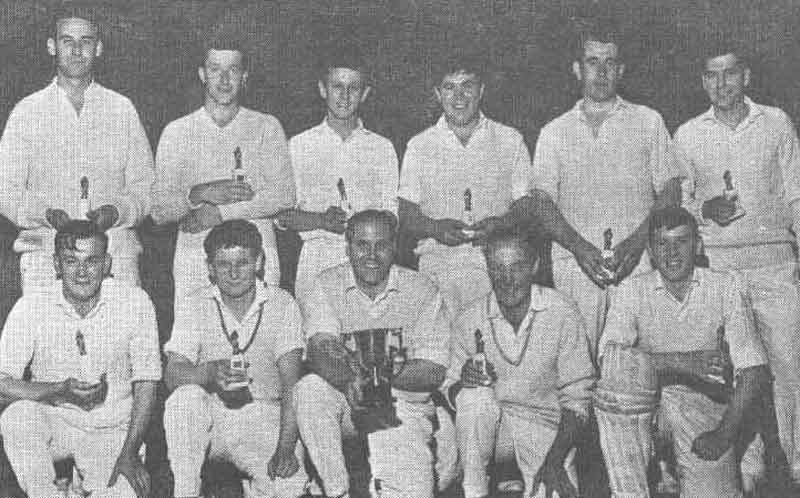
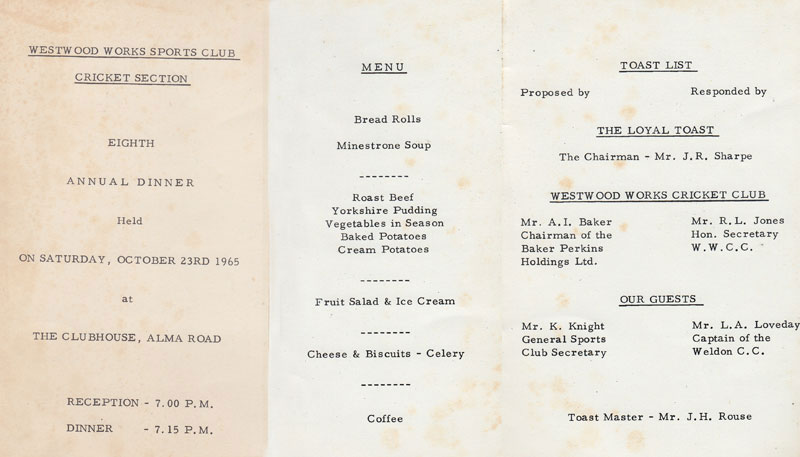
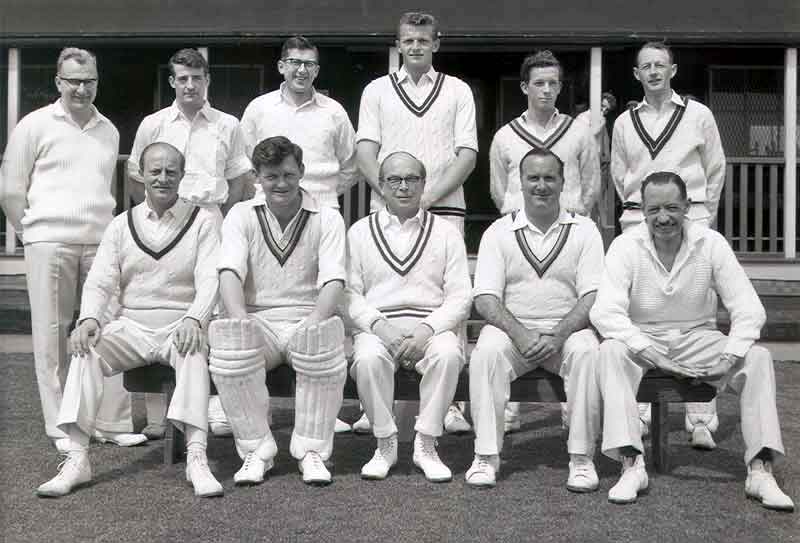
| 1960: Fixture Card | 1960: Westwood Works Cricket Team | 1960: 3rd Floor D/O Inter-D Cricket Team | 1962: Apprentice Cricket Team | 1965: Westwood win the Jaidka Cup | 1965: Cricket Section Annual Dinner/Dance Programme | 1966: Cricket Section Annual Dinner/Dance Programme |
 |
 |
 |
 |
 |
 |
 |
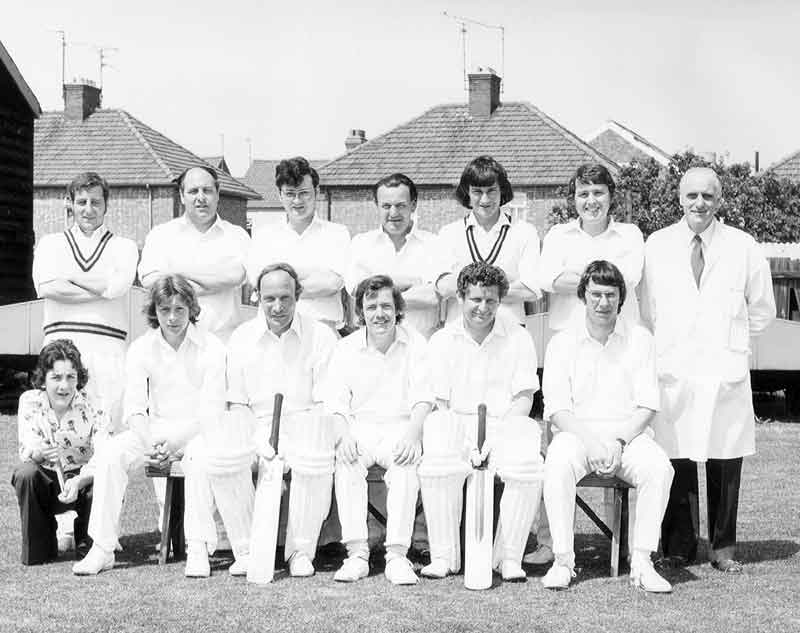
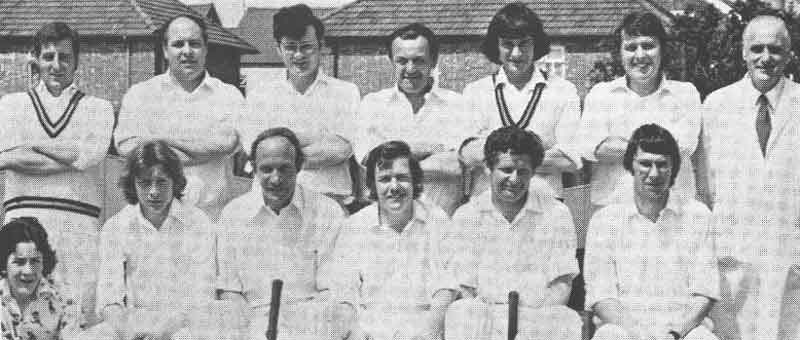
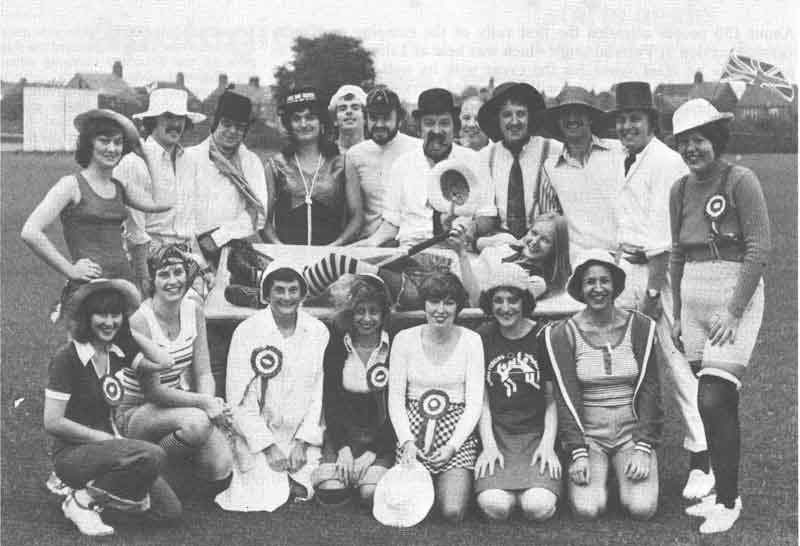
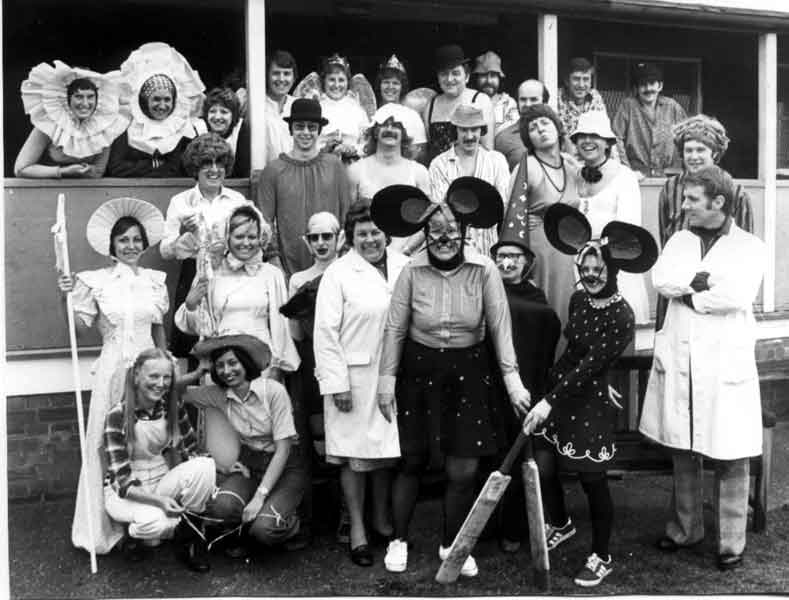
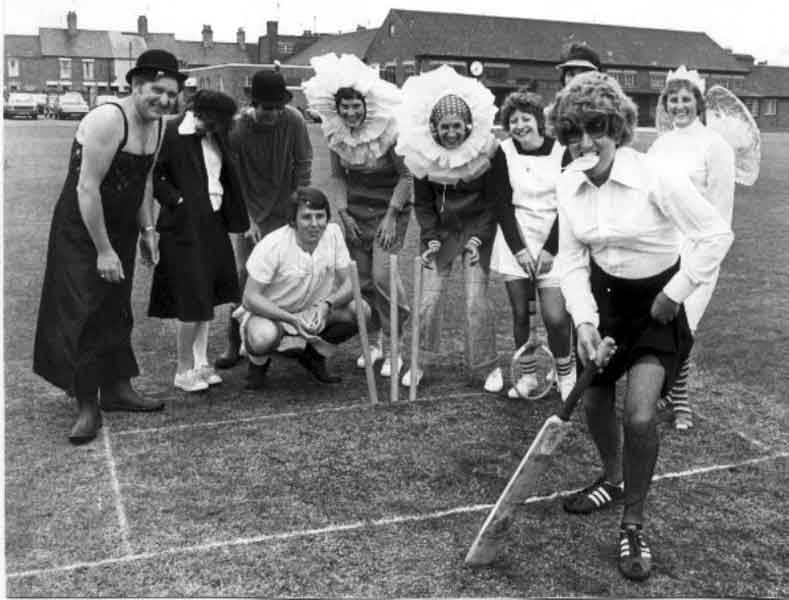
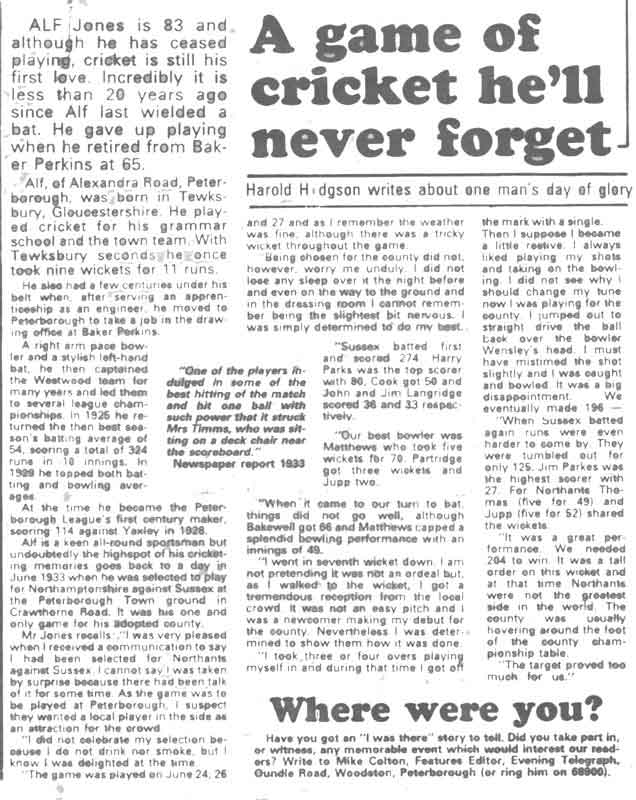
| 1960s: The Directors' XI v The Sports Club | Early 1970s: Westwood Works 1st XI | 1975: Westwood Works Cricket Team | 1977: Charity Cricket Match | 1978: A Charity Cricket Match organised by Angela Brady, Production Engineering Dept. | 1983: The Match that Alf Jones will never forget (1) | |
 |
 |
 |
||||
1983: The Match that Alf Jones will never forget (2) |
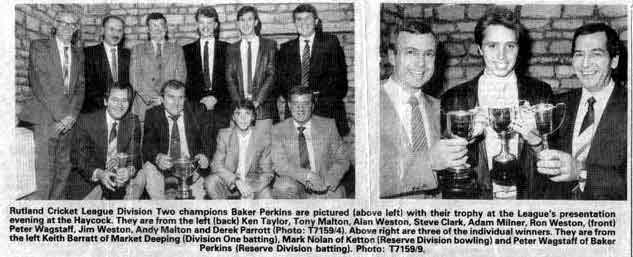
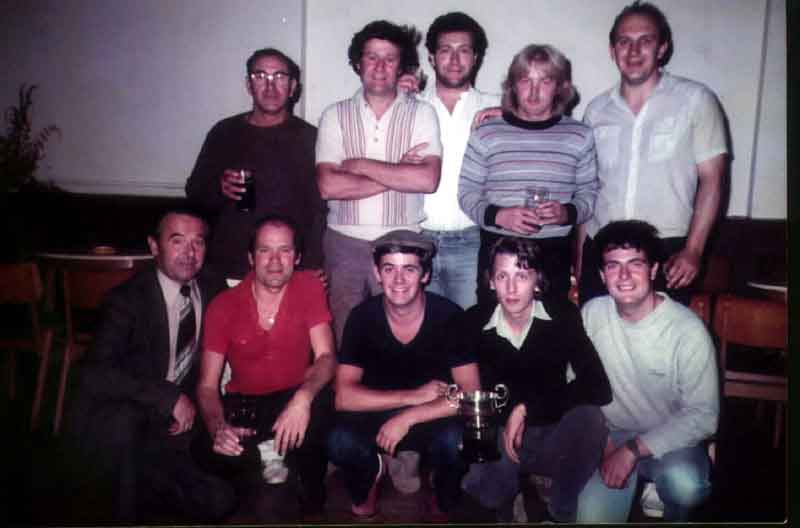
1985: Rutland Cricket League Division 2 Champions | 1980s?: Inter- departmental Cricket Winners (Plateshop) | ||||
The group newspaper "Contact" published an article under the above heading in its Autumn 1983 issue, describing the Cricket section's activities during the previous season:
"The cricket section of the sports club at Peterborough had a mixed season in their league performances this year, but made up for any disappointments by winning the Jaidka Cup, the premier tournament in the Peterborough area. They won the final, which is played over two nights, by a narrow victory over a strong Peterborough Town second-eleven.
It was an appropriate win, because traditionally the Jaidka Cup Final is always played at Baker Perkins’ Alma Road ground. This was the 49th year of the competition and the cricket section is hoping they can repeat the performance next year when the 50th anniversary match is played.
The Baker Perkins first team competes in the Millman competition, which is an extremely strong league covering Bedfordshire and Cambridgeshire. Although the team finished in a middle table position, this is now quite as good as past seasons when they have seldom been out of the first four. During the mid-seventies they won the competition and two years ago they were runners-up.
Next season, in addition to the Millman competition, the first team will also be competing in the Rutland league. Being a new team to the league they have had to join division two, but have high hopes of quickly gaining promotion to the first division.
Attractive grounds
In addition to one or two Peterborough teams, the Rutland league has many excellent sides from Leicestershire, North Cambridgeshire and South Lincolnshire. The attraction to Baker Perkins is that not only are these teams comparatively closely grouped so there will not be a tremendous amount of travelling, but also there are some extremely attractive grounds on which to play. In order to accommodate the extra fixtures, however, the number of friendly matches has had to be cut back.
The second team competed in the Jack Goodwin Peterborough league division two last season, although next year this is to be split into three divisions and the Baker Perkins side will be in division three. They, too, have high hopes of gaining promotion.
During the season the second team matched the first-eleven’s fine performance in the Jaidka by finishing as runners-up in the Jubilee Shield, another strong local limited over competition. They lost to Needale first-eleven in the 20 over final.
For many years now, the Baker Perkins cricket club has been looked upon as one of the strongest half-dozen sides in the area. Many of the players currently playing are extremely well-known in the local cricketing circles.
Longest serving
Both teams are currently going through a transition period. Several young, comparatively inexperienced players have been added to the team, and are playing alongside some older players with many years’ experience in local cricket competitions. The club’s longest serving player is Derick Parrot, who has now been playing for the club for 37 years. John Craythorne is another well-known name who has played for many years.
The cricket section itself is one of the oldest in the Baker Perkins Sports and Social Club. It was founded when the Westwood Works were first built in 1904. A cricket and football team started and the cricket team was known as the Parification cricket team – Parification meaning the process of bread making.
Although the team didn’t meet with a great deal of success in those early days, it was always well supported.
Some of the keenest rivalry in those early days of the section came in the matches against the Joseph Baker cricket team from Willesden. At the time, although Joseph Baker & Sons and Perkins Engineers Limited had amalgamated, they operated from two separate factories. The first match between the two sides took place in 1920 and the rivalry continued for 12 years until the Willesden factory was closed and the work and many workers moved to Peterborough.
Currently, the section is hoping to buy some new covers for the pitch which will cost them between £300 and £500. This has prompted the committee to look into the possibility of finding a sponsor for the section next season.
Because they try to be as self-sufficient as possible, the section run several fund raising activities of their own and they are also very grateful to the supporters club for the help they have been given over the years.
The section has a good, active committee, which meets every four to six weeks to run the club’s affairs. The chairman is Tony Malton, fixtures secretary – Jim Weston, treasurer – John Reeves, honorary secretary – Graeme Day, and club captain – Derek Gibson.
Special occasion
One of the big events of the year for Baker Perkins’ cricketers is the president’s match, which is an all-day 60-over game played against an invited team of experienced ex-county and good local players. The match is always followed by a dinner and besides supplying some first class cricket is also an excellent social occasion.
Another event which has recently been reinstated is the annual dinner and dance which is held at the end of September. During this, the various club trophies are presented. "
Can you help to fill in any missing dates? If so, please see this page for instructions on how to contact us and we'll update the captions.
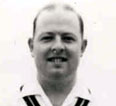 Staff Thomas joined Baker Perkins as an apprentice in 1951 and participated in many of the activities of the Sports Club. We are fortunate that Staff has made a record of much of his time at Baker Perkins and we are grateful for his permission to use extracts on this website. Here, Staff recalls playing cricket for Westwood:
“I had only been in the apprentice bay two or three weeks when I was visited by Mr Harry Iliffe and Mr. Charlie Sheffield. They introduced themselves as cricket captains of the 1st and 2nd elevens. They asked if I would meet them at the cricket nets at Alma Road ground. Apparently, Charlie McCartney who lived next door but one to Mam and Dad, at 84 Montague Road, had recommended me to them. Mr Mac was a very good sportsman. He played football for Wrexham, Notts County and Peterborough United. He also played cricket for Peter Brotherhood and therefore knew Harry Iliffe very well. So, during that week I trained and bowled at the nets for Harry. He took a big interest in me and was a kind of mentor in my cricket career. To cut a long story short, I was picked for the 2nd XI on a Saturday and Sunday in May, but on the Friday before the day I was to make my debut, Harry paid another visit to me in the apprentice bay and informed me that I was playing in the 1st XI at Pye Radio, Cambridge. Apparently, one of the picked team, Charlie Allet, had dropped out with a back injury and as he was a bowler, Harry thought that I would fit the bill. The outcome was that I did bowl and happened to bag four wickets and from then on was a member of the 1st XI under Harry Iliffe’s guidance. So, for the next eleven years, I played for the 1st XI and never ever played in the 2nd XI. The only time I was absent was for my two years’ National Service but even then I still played cricket for Baker Perkins as I was only stationed at Waddington in Lincolnshire and having 48 hour passes every weekend (other than if I was on Duty Armourer) I still played most weekends.
We also played in the Jaidka Cup (a 20-over match) on a Wednesday evening. All the local teams played in the Jaidka, even Peterborough Town 1st and 2nd X1s - Brotherhoods, Hotpoint, Mitchell’s, British Railway, Crowland, Yaxley, Oundle Town, Castor, to name just a few. We were a very good team and we won the Jaidka cup a few times. It needed steady bowling to contain batsmen to get as few runs as possible.
From what I can remember, our team consisted of the following men:
Harry Iliffe – captain; Sos Mellow – wicket keeper; Alan Francia – fast bowler; Johnny Craythorne – batsman and bowler; Alf Jones – a very good batsman (he was over 60 years old when I played.); Dennis Woodhouse – batsman; Gordon Woodhouse – batsman; Staff Thomas – bowler (me); Dennis Barber – bat; Jack Baxter – bat and bowler; Ros Forvague – bit of both; Mick Bean – wicket keeper; Alan Curwin – slow bowler; Frank Swann – bowler; Pete Lister – bat; Brian Lister – bat; Jack Rouse – umpire; Bob Sharp – umpire; Bert Slater – umpire, (all committee men) Rex King (com) Jarry Jacklin - scorer; Sam Taylor – committee man; Albert Wadsley – ground controller; Harold Bembridge – committee man; Ted Beven – committee man.
When I was 18, I topped the bowling averages for the 1st XI for that season, and received, as a prize, a cricket bat presented by Claude Dumbleton a Director of Baker Perkins. Was I proud! I still have it in our loft at 8 Denmark Drive, although the rubber grip on the handle has perished. Also in the loft is a cricket ball I received after taking a hat trick in a match!
Every year we played in a Directors’ match. Their team consisted of a few directors and the rest were professional cricketers; the likes of Norman Hever (Glamorgan); Godfrey Evans (Kent and England wicket keeper); Arthur Phebey (Kent batsman, opener); Alan Melville (Warwickshire slow bowler – very good); Alan Watkins (Glamorgan all rounder).These matches lasted all day (11 a.m. until the finish) with a big lunch in the middle of the match and a light tea at 4.30 p.m. I played against Ivor Baker, Chairman and owner of Baker Perkins, John Peake, Director, Leslie Simpson, Works Manager, and as I bowled very quickly, was told by Harry Iliffe to “slow it down against Ivor and Co.”
We also played a directors’ match against Birmingham Co-op who had a good team. The ground was huge with tennis courts and a bowling green at the far end. I remember how our Captain was annoyed that their team batted after tea (4 p.m.) as they hadn’t enough runs but we bowled them out anyway. So, we went into bat very upset and set about the bowling. Jack Baxter, who always batted without gloves, slammed them for 80 runs in half an hour. He hit the ball out of the ground three times and lost two balls. One hit was huge – a hit for six over the bowls green, over the tennis courts, over a huge tree and out of the ground. The spectators were cheering and clapping to see such hitting. Another match – a directors’ match with no directors playing, was against Courtauld’s of Coventry and played on a Warwickshire County ground. I remember there was an enormous grandstand and we had to walk right down from the top to get to the pitch. Johnny Craythorne had scored 50 runs when it was my turn to go in. Sixth or seventh wicket down, it was. Dennis Barker, our new captain as Harry Iliffe had retired, said to me “just block balls, if you can.” Well, I stopped in until Johnny Craythorne had scored 100 and then I was out – my score? Nil, nothing, a duck! That’s how we worked at the club – all as a team”.
 |
A reminder from 1969 of the heady days when 1st-class cricket matches were regularly played on the Alma Road Sports Ground. |
All content © the Website Authors unless stated otherwise.